
Land Degradation Neutrality (LDN) in Africa
Learn how Africa is addressing land degradation through Land Degradation Neutrality (LDN). Explore challenges, indicators, and monitoring tools supporting SDG 15.3.1.
Halt and reverse land degradation. Restore ecosystems. Build resilience.
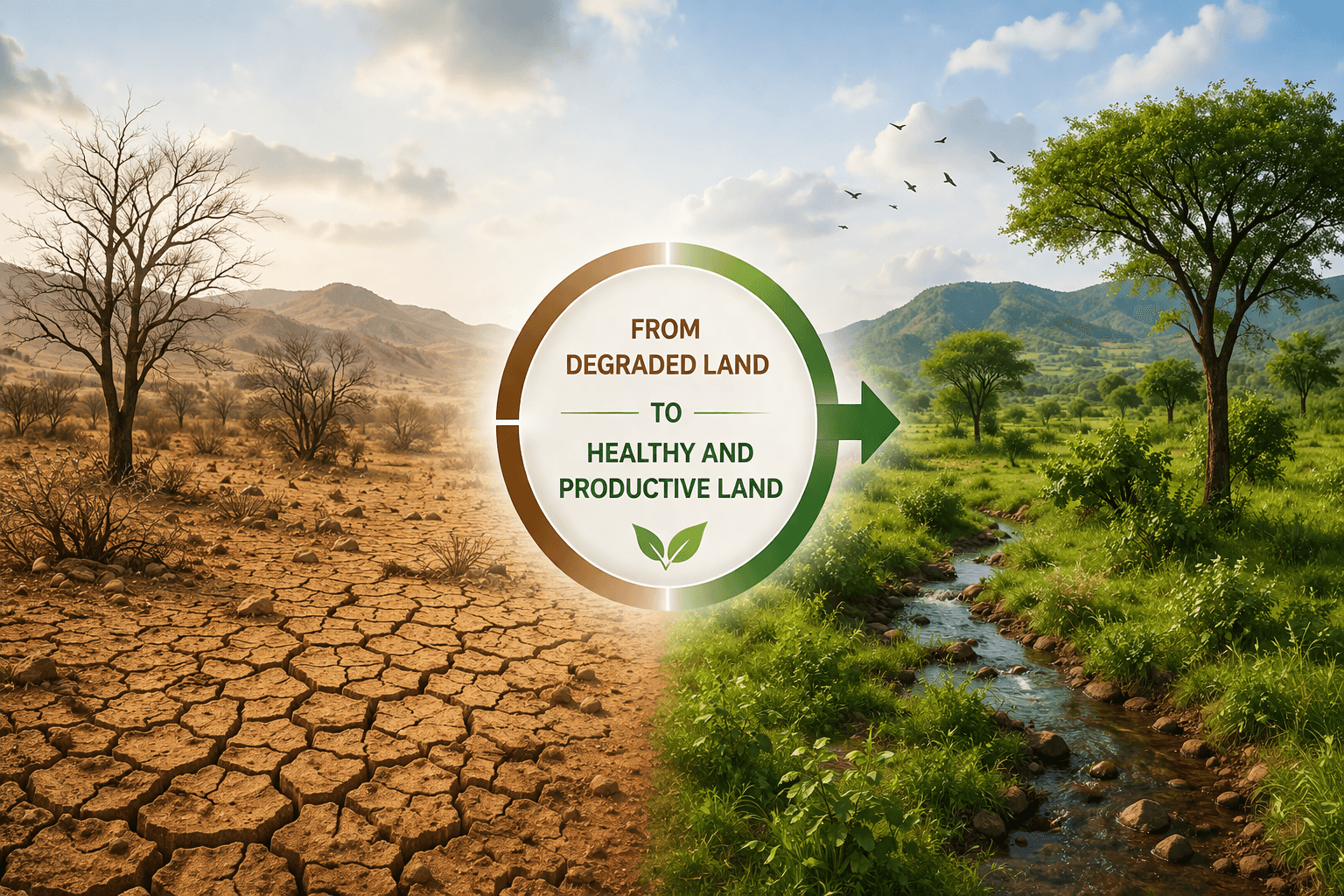
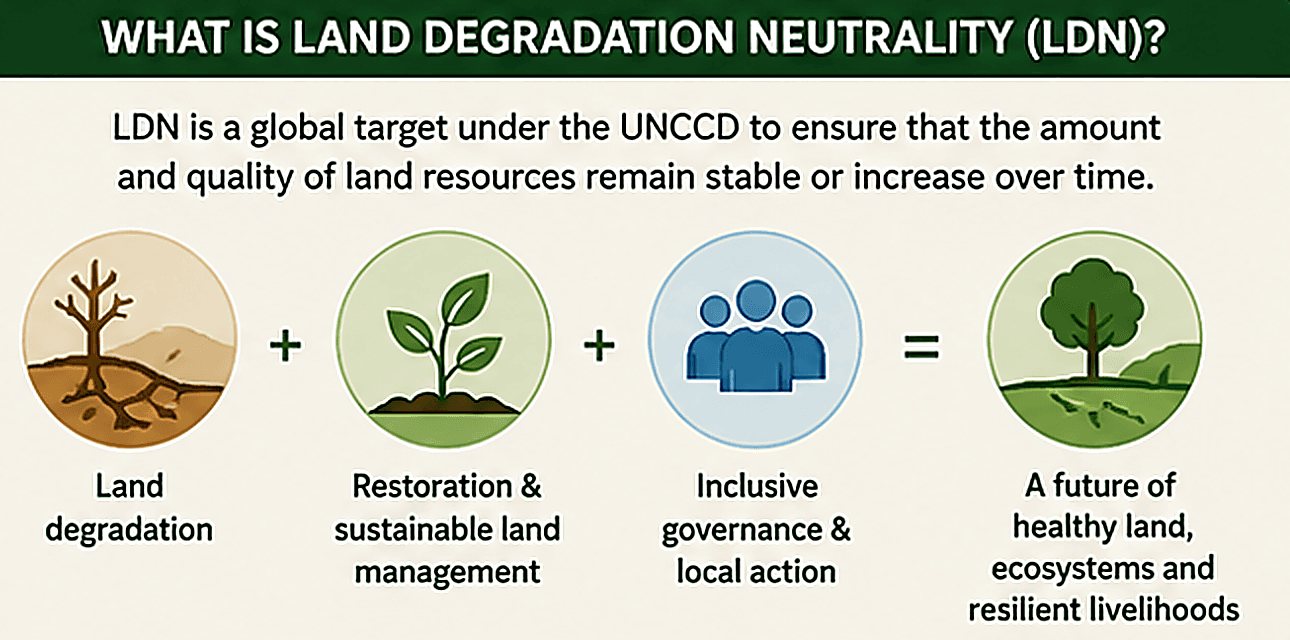
Land Degradation Neutrality (LDN) is a global commitment to ensure that land degradation is balanced by restoration, so that the overall amount of healthy and productive land remains stable or increases over time.
In Africa, where land is central to livelihoods, food systems, and ecosystems, achieving LDN is essential for sustainable development and climate resilience.
What is Land Degradation Neutrality (LDN)?
Land Degradation Neutrality (LDN) is a target under the United Nations Convention to Combat Desertification (UNCCD). It aims to maintain or improve the quantity and quality of land resources needed to support ecosystem functions and human well-being.

Land Degradation in Africa
Land degradation is a major environmental and socio-economic challenge across Africa.
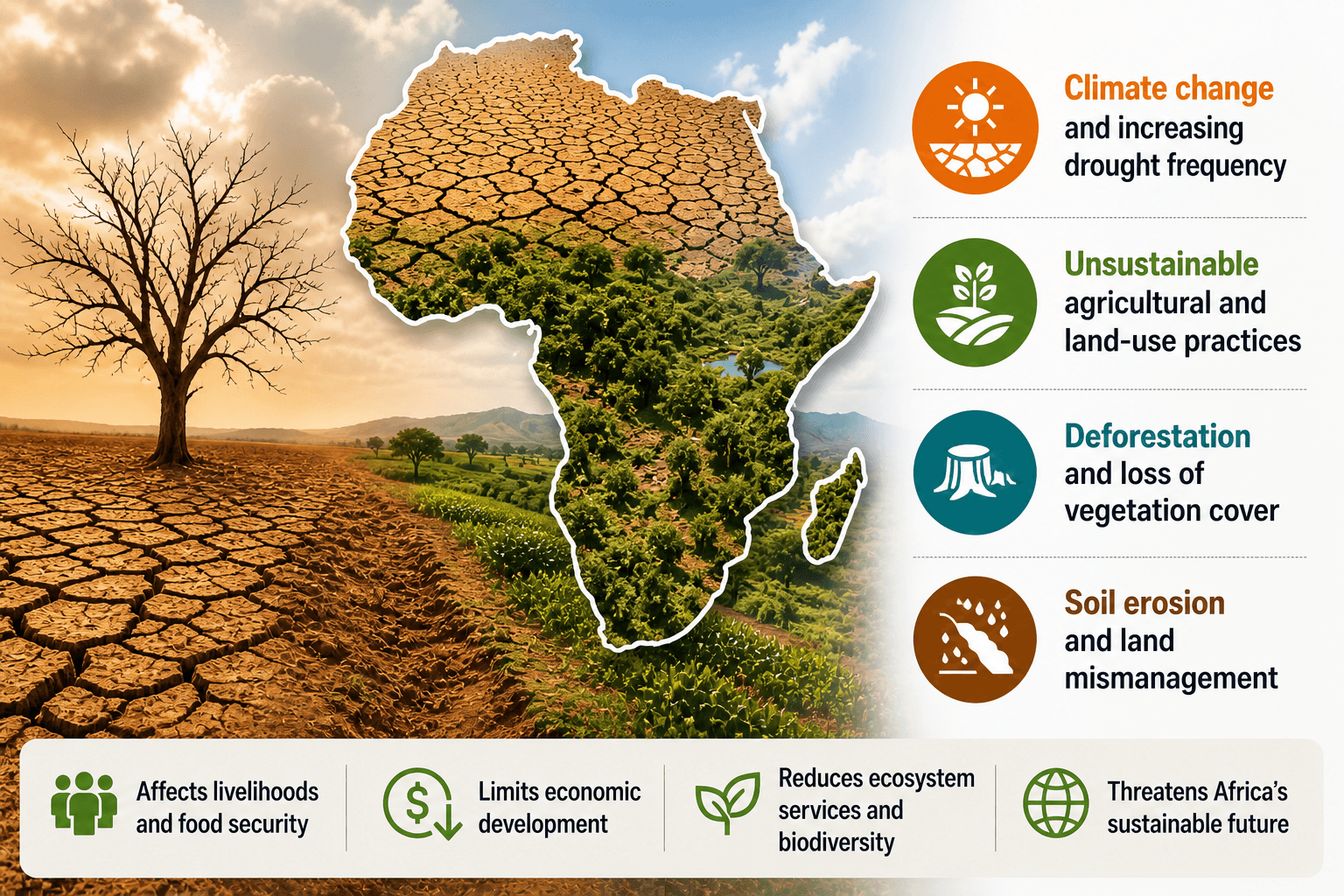
Key drivers include:
- Climate change and increasing drought frequency;
- Unsustainable agricultural and land-use practices;
- Deforestation and loss of vegetation cover;
- Soil erosion and land mismanagement.
Key Facts
- Over 65% of productive land in Africa is affected by degradation.
- More than 40% of the population depends directly on land resources.
- Land degradation significantly impacts food security and rural livelihoods.
- It contributes to biodiversity loss and climate vulnerability.
Monitoring LDN in Africa
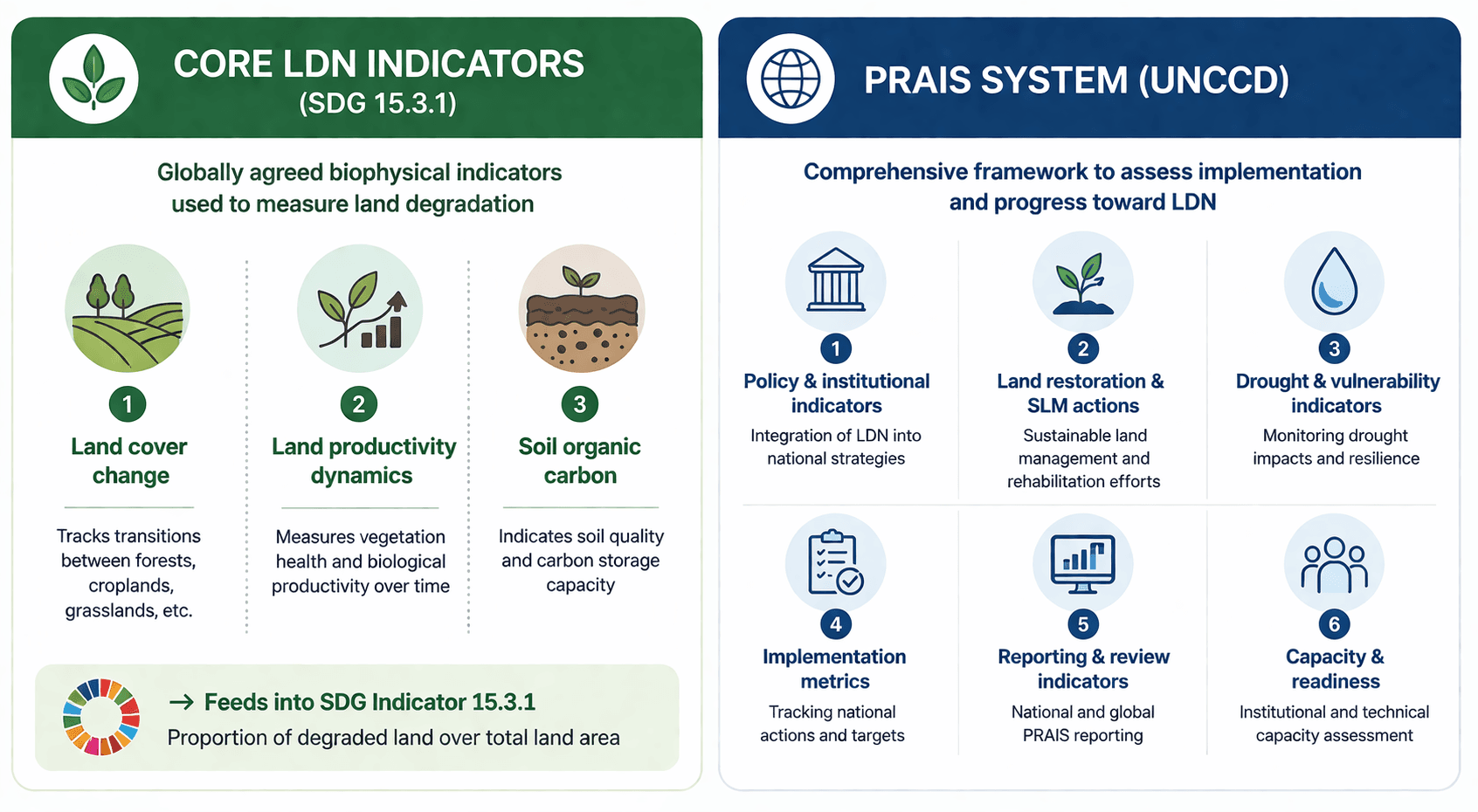
Monitoring Land Degradation Neutrality in Africa is based on a set of globally agreed indicators, complemented by a broader framework under the UNCCD Performance Review and Assessment of Implementation System (PRAIS). This allows countries to assess land condition and track progress over time.
At the global level, LDN monitoring relies on three key indicators:
- Land cover change, which tracks transitions between forests, croplands, grasslands, and other land types.
- Land productivity dynamics, which measure vegetation health and biological productivity.
- Soil organic carbon, which indicates soil quality and carbon storage capacity.
These indicators are combined to produce the SDG Indicator 15.3.1: "Proportion of degraded land over total land area".
Beyond Core Indicators: The PRAIS Framework:
In addition to the three core indicators, countries report through the UNCCD PRAIS system, which includes a wider set of indicators and information to assess progress toward LDN.
These include:
- Policy and institutional indicators, integrating LDN into national strategies.
- Land restoration and sustainable land management actions.
- Drought monitoring and vulnerability indicators.
- Implementation and reporting metrics supporting national and global assessments.
How LDN is implemented in Africa
African countries are actively working toward achieving LDN through:
- Setting national LDN targets;
- Integrating LDN into national policies and strategies;
- Implementing land restoration and sustainable land management practices;
- Strengthening monitoring and reporting systems;
These efforts are aligned with:
- The 2030 Agenda for Sustainable Development;
- Agenda 2063 of the African Union;
- National environmental and agricultural policies.
How this platform supports LDN
The Africa's Land Degradation Monitoring Platform plays a key role in supporting LDN implementation by providing:
- Harmonized datasets across Africa;
- Tools to monitor land degradation trends over time;
- Geospatial analysis through the Geoportal;
- Dashboards for SDG 15.3.1 reporting and analysis;
- Decision-support systems for policymakers and stakeholders.
Why LDN matters for Africa
Achieving Land Degradation Neutrality is essential to:
- Ensure food security;
- Protect ecosystems and biodiversity;
- Strengthen climate resilience;
- Sustain water resources;
- Improve livelihoods for millions of people.
LDN is not only an environmental goal, but it is also a development priority for Africa!
Explore LDN monitoring data and tools
Land Degradation Neutrality in Africa
Global framework, regional action, and country-level implementation
Concept promotion
In October 2015, the 12th Conference of the Parties (COP12) of the United Nations Convention to Combat Desertification (UNCCD) introduced the concept of Land Degradation Neutrality (LDN).
That same year, LDN was adopted as Target 15.3 of the Sustainable Development Goals (SDG 15 - Life on Land): “Combat desertification, restore degraded land and soil, including land affected by desertification, drought and floods, and strive to achieve a land degradation-neutral world by 2030.”
Global progress on LDN Targets
Countries worldwide are actively engaging in the LDN target-setting process:
- 130+ countries are committed to setting LDN targets;
- 82 countries reported on voluntary LDN targets (2022 reporting cycle);
- 64 countries have published high-level LDN target notes.
Additional countries are currently developing or updating their targets
Supporting LDN implementation
International and regional partners play a key role in supporting countries, including:
- FAO (Food and Agriculture Organization);
- RCMRD (Regional Centre for Mapping of Resources for Development);
- OSS (Sahara and Sahel Observatory).
These institutions support:
- Strengthening LDN monitoring and reporting;
- Improving data and indicators;
- Promoting sustainable land management practices.
Country profiles and decision support
Each participating country develops an LDN country profile, providing:
- Evidence-based analysis of land degradation;
- Priority areas for intervention;
- Strategic guidance to support investment and policy decisions.
Africa's engagement
African countries are strongly engaged in the LDN process, with many:
- Setting or updating national LDN targets;
- Strengthening monitoring systems and reporting capacities;
- Implementing land restoration and sustainable land management initiatives.